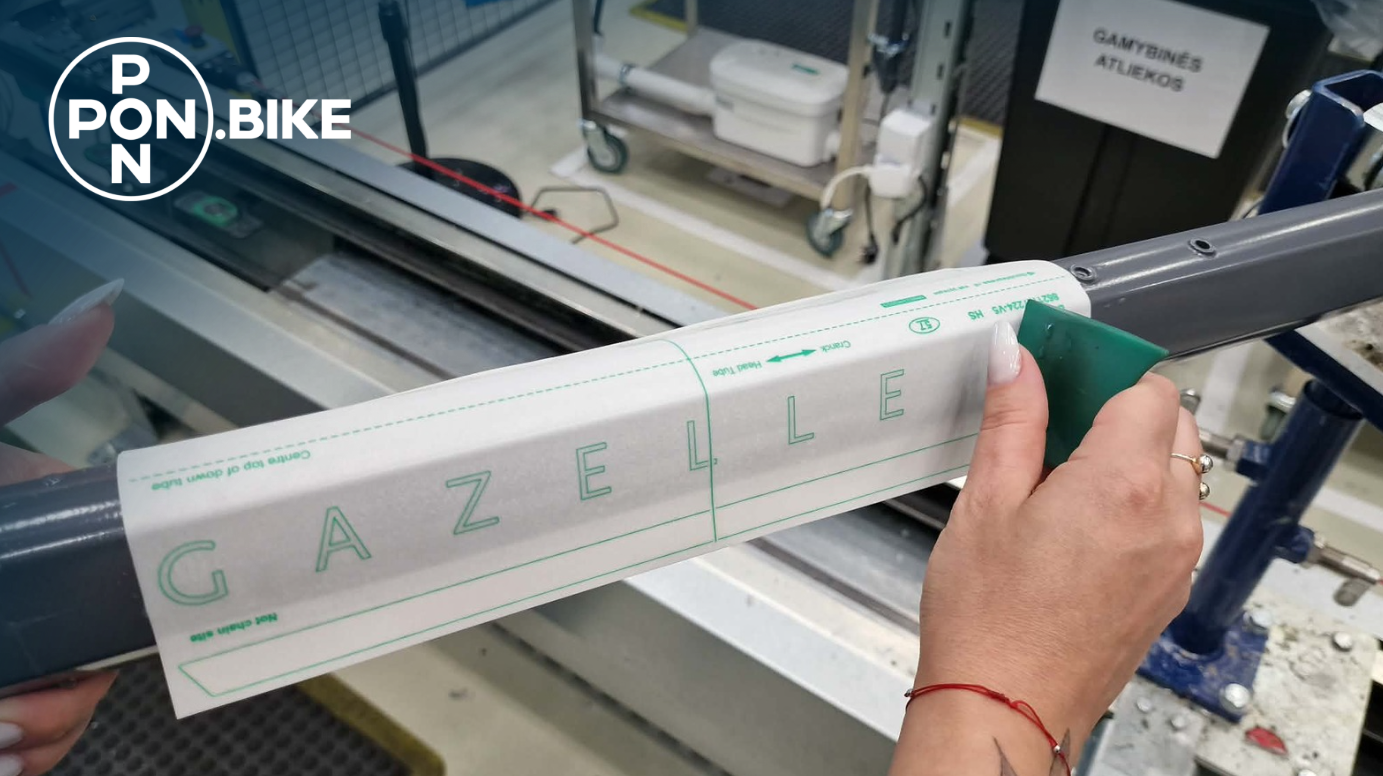
When a bicycle frame has been painted, it may seem like the job is done. The color is there, but something is still missing. It is during the decal application stage that the frame gains its true appearance and becomes instantly recognizable.
At first glance, the process may look simple, but in reality every decal applied to the frame requires a different level of attention. Ugnė, who has been part of the team for about a year, smiles and says:
"It looks like it's just a simple sticker. But in reality, that sticker goes through several different steps."
Not only does the number of decals vary from frame to frame, but so do their size, texture, and the application method itself. The process begins by soaking the decal in water. It is then carefully transferred onto the frame and smoothed using a special tool known within the team as a "splender."
Accurate positioning is essential. While there are certain reference points, much depends on the individual applying the decal and their own way of working. Even though everyone performs the same task, each person has developed their own technique. As Ugnė explains:
"It seems like we're all doing the same job, but everyone has their own way. One person turns the frame, another turns themselves, someone else crouches down."
Applying decals also requires physical endurance. The frames are not light, and some areas are difficult to reach, so the work involves constant movement, changing positions, and adapting to each frame. Ugnė jokingly says that the job is like a workout.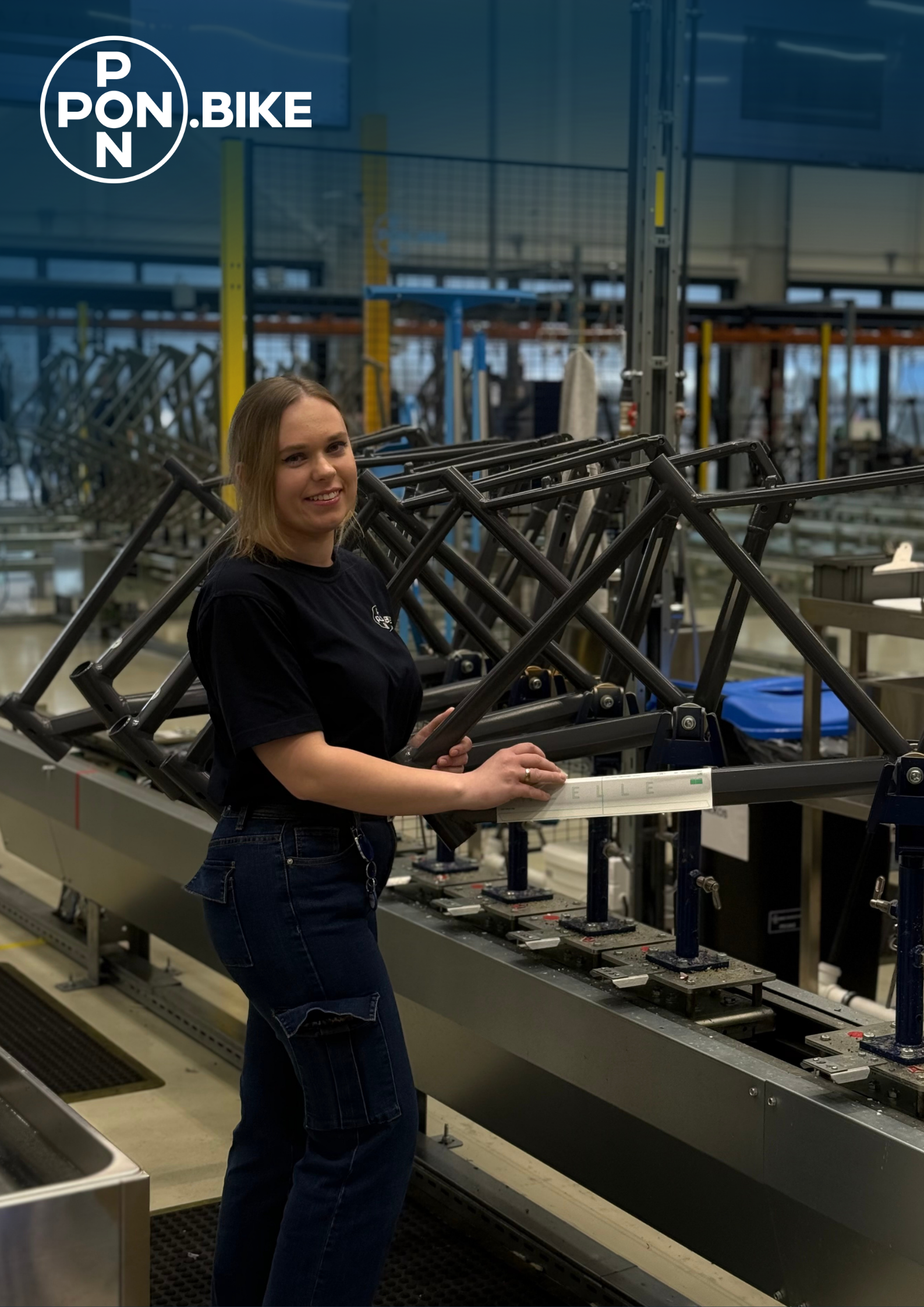
The team itself is just as important. By coincidence, this particular team is made up entirely of women. With a smile, Ugnė describes them as:
"We're quite a loud, energetic women's team."
Everyday life in the team is built on simple things—good conversations, shared laughter, and chats over a cup of coffee during breaks.
"It's great when you share the same sense of humor with the people you work with. After all, you spend most of your day together," says Ugnė.
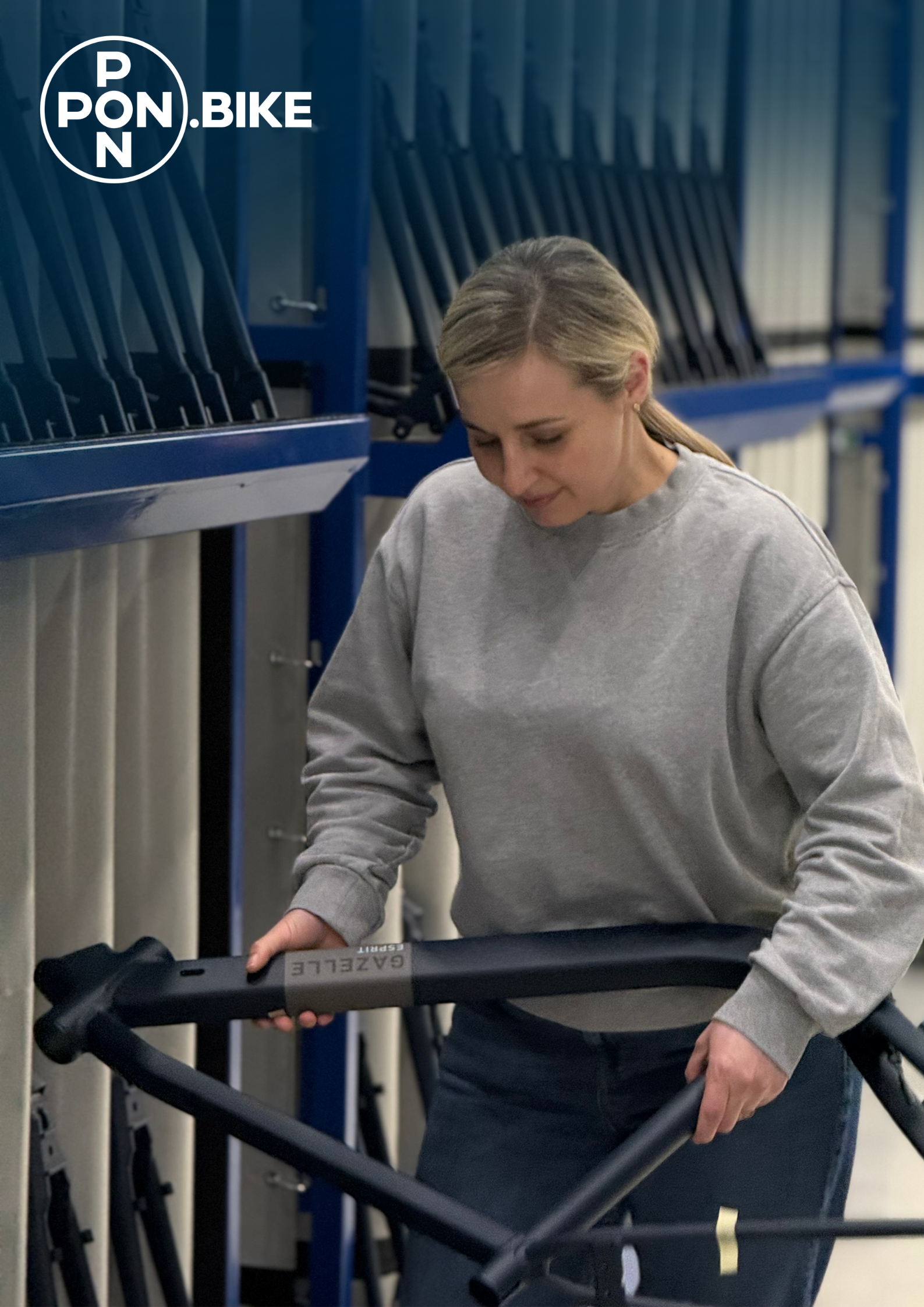
Once the frames have been decorated with decals, they move on to the clear coating process and then to quality inspection.
This is where Renata comes in. She is responsible for ensuring that only high-quality frames continue through the production process. She carefully inspects the work completed in every previous stage—from painting and decal application to the quality of the clear coat.
The job requires great concentration, but no two days are the same.
"Every day is different. There are always new challenges," Renata explains.
Even when difficulties arise, the team works hard to maintain a positive atmosphere.
"We try to stay positive and not get stressed," she says.
Thanks to the decal application team's precision and the careful quality inspections, each bicycle frame leaves this stage with its unique identity and continues its journey to the next step of production—frame preparation. 🛠
Pon.Bike Lithuania
Factory:
Pramonės g. 13A
LT-57242 Kėdainiai (Kėdainiai Free Economic Zone)